
Advanced Maritime Surveillance and Intelligence Services
Detecting Illegal Ship-to-Ship (STS) Transfers and Dark Vessels Operating Across Eastern Peninsular Malaysia
Advanced Maritime Surveillance and Intelligence Services for Detecting Illegal Ship-to-Ship (STS) Transfers, Dark Vessels Operating Without AIS, and Sanctioned Oil Movement Across Eastern Peninsular Malaysia and Key Southeast Asian Maritime Corridors
We provide specialist maritime surveillance and aerial imagery services focused on identifying and documenting illegal ship-to-ship (STS) transfers, dark vessels operating without AIS, and sanctioned shipping activity linked to Iran, Russia, and China trade flows. Operating across Eastern Peninsular Malaysia, Indonesia, and the Philippines, our capability delivers real-time, evidence-grade photo and video intelligence, enabling clients to detect, monitor, and prove illicit maritime activity in one of the world’s most active STS zones. This capability is specifically designed for environments where vessels intentionally avoid detection and traditional maritime tracking methods are no longer sufficient.
Real-Time High-Resolution Aerial Photography and 360-Degree Video Surveillance of Dark Fleet Tankers Conducting Covert Ship-to-Ship Transfers Without AIS in High-Risk and Sanctions-Exposed Maritime Zones
Our aerial surveillance platform captures high-resolution, 360-degree imagery and video of vessels engaged in covert STS operations, including shadow fleet tankers disabling AIS to evade detection. This provides visual confirmation of illicit cargo transfers, commonly associated with Iranian oil sanctions evasion, Russian crude movements, and China-linked maritime trading networks, delivering actionable intelligence beyond traditional satellite tracking. By placing eyes directly on the vessel, we move beyond assumption and provide clear, indisputable evidence of activity as it happens.
Drone-Integrated Signals Intelligence (SIGINT) Capability Enabling Global Forward and Backward Tracking of Vessels and Onboard Devices Beyond AIS, Satellite Tracking, and Conventional Maritime Monitoring Systems
Our proprietary signals intelligence (“sniffer”) technology, fully integrated into our aerial surveillance drones, enables detection of WiFi, Bluetooth, and onboard device signatures during operations. Once a vessel’s device environment is captured, it can be tracked globally—both forward and backward in time—wherever those signals have been detected. This allows us to reconstruct historical movement patterns, identify previous locations, and maintain ongoing tracking long after the vessel leaves the surveillance area. This capability fundamentally changes maritime intelligence by enabling persistent tracking independent of AIS or declared vessel movements.
Illegal Ship-to-Ship (STS) Transfers, Dark Vessels and Dark Fleets
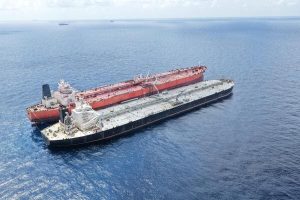
Illegal Ship-to-Ship (STS) Transfers
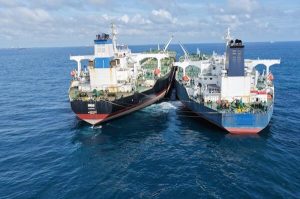
Dark Vessels Operating Without AIS
Persistent Global Tracking and Monitoring of Dark Vessels, Shadow Fleet Tankers, and Sanctioned Ships Across Malaysia, Indonesia, the Philippines, and International Maritime Trade Routes
Unlike conventional systems limited to real-time tracking, our capability enables persistent global monitoring of vessels and associated devices, even after initial contact. By leveraging detected signal signatures, we can track vessels across Malaysia, Indonesia, the Philippines, and globally, identifying repeat STS activity, cross-border movements, and links to sanctioned shipping networks and illicit oil trades. This provides a continuous intelligence picture, allowing clients to understand not just isolated incidents, but full operational patterns and networks.
Detection, Identification, and Monitoring of Sanctioned Vessels, Shadow Fleet Activity, and Illicit Oil Transfers Linked to Iranian Crude, Russian Oil Networks, and China-Associated Maritime STS Operations
We specialise in identifying vessels involved in sanctions evasion, illicit oil trading, and undeclared cargo transfers, particularly those linked to Iranian crude exports, Russian shadow fleets, and China-associated STS operations. Our combined aerial and signals intelligence approach provides verifiable, real-world evidence, supporting enforcement, compliance, and financial risk mitigation. This enables stakeholders to identify high-risk vessels, confirm illicit activity, and take informed action based on reliable intelligence.
Continuous Tracking and Behavioural Analysis of Vessel Movements and Onboard Device Signatures Following Detection of Illegal Ship-to-Ship Transfer Operations
Once a vessel has been observed and its device signatures captured, we enable continuous tracking of both the vessel and its onboard systems, regardless of AIS status. This provides ongoing visibility into vessel behaviour, routing, and operational patterns, even after leaving the initial surveillance zone, making it possible to identify repeat offenders, coordinated activity, and long-term operational trends. This transforms one-off surveillance into sustained intelligence coverage.
Delivery of Evidence-Grade Maritime Intelligence Packages Combining Geolocated Photo and Video Surveillance with Device-Level Data for Sanctions Enforcement, Insurance Claims, and Legal Proceedings
Our outputs include timestamped, geolocated photo and video evidence, combined with device-level intelligence, providing a robust evidentiary package for use in sanctions enforcement, insurance disputes, and legal action. This is particularly relevant for cases involving illegal STS transfers, undeclared cargo movements, sanctions breaches, and maritime fraud, where clear, defensible evidence is required to support decision-making and enforcement outcomes.
Monitoring and Surveillance of High-Risk Maritime Zones Including Eastern Peninsular Malaysia Anchorage, South China Sea Trade Routes, Indonesian Archipelagic Waters, and Philippine Maritime Corridors Known for Illicit STS Activity
We operate in key regions known for illicit STS activity and dark vessel operations, including Eastern Peninsular Malaysia, the South China Sea, Indonesian waters, and the Philippines. These areas are central to global shadow fleet operations, where vessels engage in covert cargo transfers, AIS suppression, and sanctions evasion tactics. Our presence in these regions provides direct access to high-value intelligence opportunities.
Identification and Analysis of AIS Shutdowns, GPS Spoofing, Identity Manipulation, and Covert Maritime Behaviour in Shadow Fleet and Illicit Shipping Networks
Our capability is designed to expose vessels engaged in AIS manipulation, GPS spoofing, and deceptive routing, commonly used in illegal oil trading, sanctions evasion, and covert maritime logistics operations. By combining visual surveillance with global signal tracking, we provide a deeper understanding of vessel intent, behaviour, and operational methods, enabling more accurate risk assessment and decision-making.
Bridging the Critical Gap Between Satellite-Based Detection and Real-World Evidence Through Combined Aerial Surveillance, Device Detection, and Persistent Global Signal Tracking of Illegal Maritime Activity
While many systems detect suspicious maritime activity through data analysis and satellite monitoring, we provide the missing layer: verified, real-world evidence combined with persistent global tracking. By linking aerial imagery, onboard device detection, and historical signal tracking, we deliver a complete intelligence picture—turning suspected illegal STS activity into proven, trackable events across time and geography. This ensures that intelligence is not only detected, but validated, understood, and actionable.
Request a Quotation
FAQ'S
Illegal ship-to-ship (STS) transfers involve the covert transfer of cargo—often oil—between vessels at sea, typically conducted outside regulated ports and without proper reporting. These operations are commonly used by dark vessels operating without AIS to evade detection and are heavily associated with sanctioned oil trades linked to Iran, Russia, and shadow fleet networks operating in Southeast Asia and the South China Sea. Such activity presents significant legal, financial, and environmental risks.
We detect and monitor dark vessels that have disabled AIS through a combination of aerial surveillance and real-time intelligence gathering. By deploying drones, we are able to visually identify vessels, capture high-resolution photo and video evidence, and confirm STS activity as it occurs. This allows us to operate effectively in environments where traditional satellite and AIS-based tracking methods fail.
Our aerial platforms provide 360-degree photo and video surveillance of vessels engaged in illicit STS operations, capturing clear, timestamped, and geolocated imagery. Operating in key hotspots such as Eastern Peninsular Malaysia, Indonesia, and the Philippines, we deliver real-time, evidence-grade visual confirmation of vessel activity, including cargo transfer operations between tankers operating covertly.
Our proprietary signals intelligence (“sniffer”) technology, integrated into our drones, detects WiFi, Bluetooth, and onboard device signals emitted by vessels. Once these signals are captured, they can be tracked globally—both forward and backward in time—wherever those signals have been observed. This enables us to reconstruct historical movements and maintain ongoing tracking of vessels and associated devices, even after they leave the surveillance area.
Yes. Once we capture a vessel’s device signature using our sniffer technology, we can continue tracking that vessel globally, regardless of AIS status or location. This allows us to follow vessel movements across regions, identify repeat STS behaviour, and build a complete operational picture of shadow fleet activity and sanctioned shipping routes.
Our services are used by organisations exposed to maritime risk, sanctions compliance, and illicit trade, including marine insurers, commodity traders, maritime law firms, and government enforcement agencies. These stakeholders rely on evidence-grade intelligence to support sanctions enforcement, insurance claims, legal proceedings, and risk management decisions related to illegal STS operations and dark vessel activity.