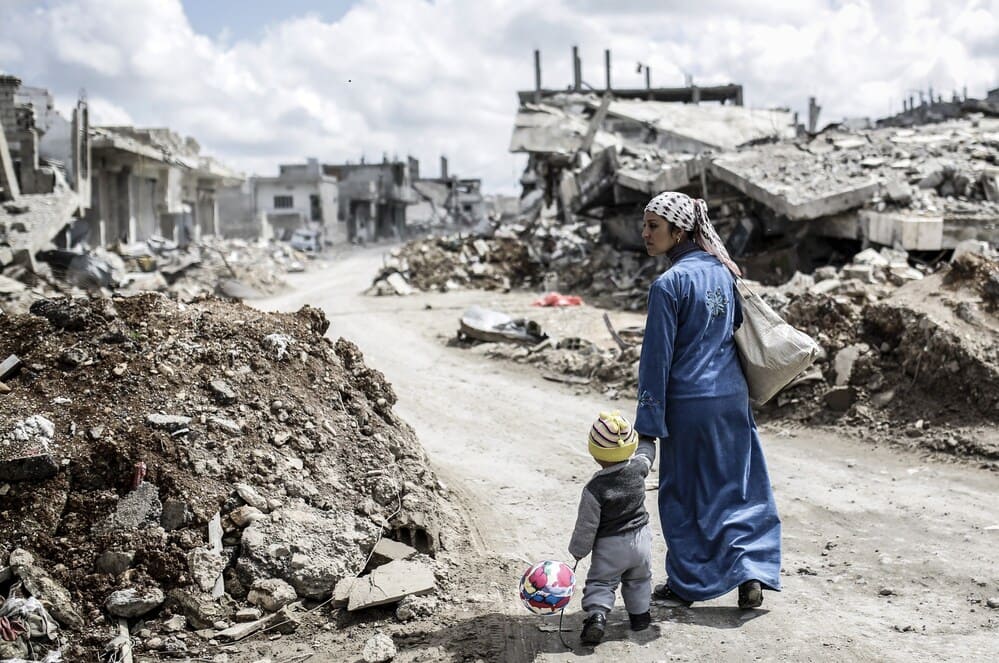
Entering or operating in Syria requires far more than data, reports, or remote assessments. The realities on the ground shift frequently due to political dynamics, local governance structures, reconstruction initiatives, sanctions, tribal networks, economic instability, and regional influence. For organisations to make sound decisions, they must combine high-level leadership engagement with accurate ground-truth intelligence collected in real time.
This blog explains the role of leadership engagement, why ground-truth collection is essential, and how companies can integrate both into a robust decision-making framework for Syria.
Understanding the Syrian Operating Environment Through Direct Leadership Engagement
Effective operations in Syria begin with strategic leadership engagement—interacting directly with key stakeholders, community leaders, local authorities, and sector-specific influencers. In a country where authority is decentralised and layers of control vary by region, personal relationships and credible introductions matter more than formal documentation.
Leadership engagement supports:
- Access to reliable information unavailable through public channels
- Relationship-building with decision-makers in Damascus, Aleppo, Latakia, Homs, and Deir ez-Zor
- Faster clarification of bureaucratic or regulatory requirements
- Risk reduction through early warnings and real-time feedback
- Cultural alignment, ensuring organisations operate with respect and awareness
In the Syrian context, strategic engagements are not optional—they are an indispensable operational asset.
Why Ground-Truth Intelligence Outperforms Remote Reporting in Syria
Ground-truth intelligence provides direct, verified insight into what is happening in a specific area, sector, or community. Remote reports, while useful, often lag behind reality. Conditions in Syria can shift dramatically within hours, particularly in areas influenced by local armed actors, competing authorities, or reconstruction projects.
Ground-truth collection is essential because it delivers:
- Accurate situational awareness
- Validation of assumptions used in planning and investment
- Real-time monitoring of routes, assets, supply chains, and contractors
- Local perception analysis—how communities view a project or company
- Verification of compliance, especially under sanctions frameworks
- Operational clarity in high-risk areas where digital data is limited or controlled
Companies that rely solely on remote assessments risk operational failure, reputational damage, or legal exposure.
Integrating Local Networks, Community Leaders, and On-Ground Advisors
Strong networks in Syria are built through trusted local intermediaries, long-standing advisors, and individuals capable of navigating both formal and informal systems. Engaging local leadership helps organisations understand:
- Community expectations
- Tribal or clan dynamics
- Local economic pressures
- Informal power structures
- Emerging risks in reconstruction zones
- Stakeholder influence on approvals or access
These insights allow leaders to shape strategies that are culturally sensitive, realistic, and aligned with local expectations—reducing friction and improving project longevity.
Leadership Presence: When Being on the Ground Changes Everything
Where possible and appropriate, leadership presence inside Syria—whether in Damascus, Aleppo, Hama, or Latakia—creates opportunities impossible to achieve remotely:
- Demonstrates commitment and seriousness
- Builds trust and credibility with local authorities
- Allows leaders to directly observe operational constraints
- Facilitates face-to-face negotiation, which is often required
- Enables rapid problem-solving and decision-making
When direct presence is not viable, teams rely on embedded ground networks to maintain the same level of visibility.
Ground-Truth for Humanitarian, Reconstruction, and Commercial Sectors
Regardless of sector, ground-truth intelligence ensures decisions are made with real-time accuracy:
- Humanitarian operations need verified access routes, local sentiment, and risk indicators.
- Reconstruction projects require validation of contractors, supply routes, and regulatory requirements.
- Commercial ventures must understand market dynamics, compliance, local partnerships, and community expectations.
Ground-truth is the difference between strategic clarity and costly miscalculations.
Combining Leadership Engagement and Ground-Truth for Effective Strategy in Syria
The strongest approach merges both elements:
- Leadership engagement provides strategic access and opens doors.
- Ground-truth intelligence keeps operations aligned with daily realities.
Together, they offer:
- Better forecasting
- Stronger partnerships
- Faster adaptation to risks
- More reliable compliance
- Informed investment and operational decisions
In the Syrian operating environment, organisations succeed not through assumptions, but through accurate insight, credible relationships, and consistent presence—even when that presence is facilitated through trusted local partners.